
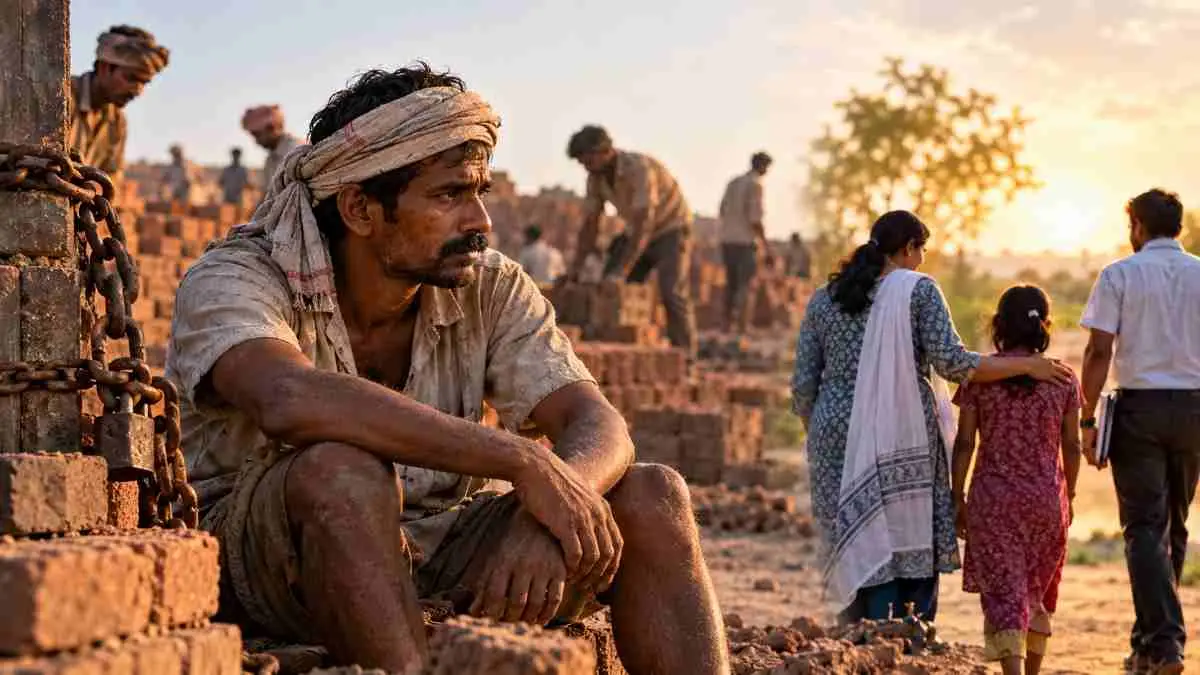
Bonded labour is a form of exploitation in which a person is forced to work to repay a debt or meet an obligation under conditions that take away their freedom. It often affects people already struggling with poverty, limited employment opportunities and social inequality. Despite being prohibited by law in India, bonded labour remains an important human rights concern that requires awareness, timely intervention and long-term rehabilitation.
Understanding how bonded labour works, recognising its warning signs and knowing where to seek help are essential steps towards protecting vulnerable individuals and families.
What Is Bonded Labour?
Bonded labour, also known as debt bondage, occurs when a person is compelled to provide labour or services because of a debt, advance payment, customary obligation or similar arrangement that restricts their freedom.
For example, a worker may borrow money from an employer to meet an urgent family expense. The employer may then demand long hours of work while deducting wages for the debt, charging unfair interest or refusing to allow the worker to leave. The debt may continue to grow, making it increasingly difficult for the worker to escape the situation.
In some cases, family members may also be required to work to repay a debt. Children can be particularly vulnerable when their parents' financial difficulties expose them to exploitation.
A loan or wage advance does not automatically constitute bonded labour. The critical issue is whether a person is subjected to forced or partly forced labour, loses their freedom to leave, or is exploited through a prohibited bonded-labour arrangement.
What Causes Bonded Labour in India?
Bonded labour is closely connected to economic hardship and unequal power relationships. Several factors can make individuals and families vulnerable to exploitation.
1. Poverty and Financial Emergencies
Families with limited savings may borrow money to pay for medical treatment, food, housing, education or other essential needs. When fair credit and reliable employment are unavailable, an advance from an employer or contractor can become a source of dependence.
2. Lack of Awareness About Legal Rights
Workers who do not know their rights may believe they must continue working until an employer declares their debt repaid. They may also be unaware that certain debt arrangements and forms of forced labour are prohibited by law.
3. Unfair Recruitment Practices
Some workers are recruited through contractors who promise wages, accommodation or regular employment. Once they arrive at a workplace, they may discover that the conditions are different from what was promised, their wages are withheld, or they are prevented from leaving.
4. Social and Economic Inequality
Discrimination, landlessness, social exclusion and unequal access to resources can increase vulnerability. People who have few alternatives for employment or support may find it particularly difficult to challenge an exploitative employer.
5. Migration and Isolation
Migrant workers may travel far from their homes in search of work. Language barriers, unfamiliar surroundings and limited access to local support can make it harder to report exploitation or seek assistance.
6. Intergenerational Debt and Exploitative Customs
In some situations, debts or obligations are passed from one generation to another. A family may feel compelled to continue working for the same employer because of an inherited debt or a long-standing local practice.
Such customs cannot override the protections provided by law.
What Are the Warning Signs of Bonded Labour?
Bonded labour is not always immediately visible. A person may appear to be employed voluntarily while facing serious restrictions behind the scenes.
Possible warning signs include:
- A worker is told they cannot leave until a debt has been repaid.
- Wages are withheld or repeatedly deducted through unclear calculations.
- The employer controls identity documents or uses threats to prevent departure.
- Workers are forced to work excessive hours without fair compensation.
- Workers are threatened with violence, punishment or harm to their families if they refuse to work.
- Children are made to work to repay a family debt.
- A person is transported to a workplace through deception and subsequently prevented from leaving.
A single sign does not necessarily establish that bonded labour has occurred. However, several warning signs together may indicate a need for urgent investigation and protection.
What Does Indian Law Say About Bonded Labour?
India has legal protections intended to prevent forced labour and protect people from exploitation.
1. Article 23 of the Constitution of India
Article 23 prohibits trafficking in human beings, begar and other similar forms of forced labour. Violations are punishable in accordance with law.
This constitutional protection establishes an important foundation for safeguarding human dignity and freedom.
2. The Bonded Labour System (Abolition) Act, 1976
The Bonded Labour System (Abolition) Act, 1976, is the principal legislation specifically addressing bonded labour in India. The bonded labour system was abolished with effect from 25 October 1975, and the Act subsequently provided the statutory framework for its abolition.
Key protections under the Act include:
- Abolition of bonded labour: A person cannot legally be compelled to provide bonded labour under a prohibited arrangement.
- Extinguishment of bonded debt: The legal obligation to repay a bonded debt is extinguished under the Act.
- Invalidation of bonded-labour agreements: Agreements requiring bonded labour are rendered void.
- Protection of residential rights: The Act provides protections concerning eviction from certain homes or residential premises occupied by bonded labourers.
- Penalties for violations: The Act provides for punishment of offences associated with the bonded-labour system.
The law also assigns responsibilities to district authorities and provides for vigilance committees to support implementation.
3. Government Rehabilitation Support
Rescuing a person from exploitation is only the first step. Rehabilitation may require financial assistance, safe accommodation, medical care, counselling, education and help establishing a sustainable livelihood.
The Government of India's Central Sector Scheme for Rehabilitation of Bonded Labourers provides a framework for rehabilitation assistance to eligible rescued workers. The applicable assistance depends on the scheme's current rules and the circumstances of the case.
The Ministry of Labour and Employment reported in July 2025 that the scheme provides for immediate financial assistance of up to ₹30,000 per case and rehabilitation assistance of ₹1 lakh, ₹2 lakh or ₹3 lakh according to the beneficiary category and level of exploitation, subject to the scheme's requirements.
Official references:
- India Code: Bonded Labour System (Abolition) Act, 1976
- Ministry of Labour and Employment: Rehabilitation of Bonded Labourers
How Can Victims of Bonded Labour Get Help?
People experiencing bonded labour, as well as those who suspect exploitation, can seek help from the appropriate authorities and organisations.
Step 1: Contact the District Administration
The District Magistrate or Collector and the Sub-Divisional Magistrate have statutory responsibilities under the bonded-labour framework. They can be approached to report suspected cases and seek intervention.
Step 2: Inform the Labour Department
The local Labour Department can help direct complaints to the relevant authorities and explain available worker protections.
Step 3: Contact the Police in Cases of Threats or Immediate Danger
If a worker is being threatened, confined, assaulted or prevented from leaving, the police should be informed. In an immediate emergency in India, call 112.
Do not attempt a dangerous confrontation with an employer or trafficker. Prioritise the safety of the affected person and seek assistance from authorised responders.
Step 4: Seek Support from a Credible NGO
An experienced non-governmental organisation may help connect affected individuals with authorities, legal services, shelter, healthcare and rehabilitation support.
NGOs can also help raise awareness, document concerns appropriately and support people as they work towards rebuilding their lives.
Step 5: Pursue Rehabilitation and Long-Term Support
After release, individuals may need assistance obtaining documents, accessing government schemes, returning safely to their families, enrolling children in school or finding dignified employment.
Effective rehabilitation should focus on restoring independence rather than simply removing a person from an exploitative workplace.
Why Rehabilitation Matters After Rescue
Freedom from bonded labour is essential, but it does not automatically resolve the conditions that made exploitation possible.
A family may still face debt, insecure housing, limited education and a lack of regular income. Without appropriate support, these difficulties can increase vulnerability to further exploitation.
A comprehensive rehabilitation approach can include:
- Safe shelter and access to essential services.
- Medical care and psychological support when needed.
- Legal assistance and help accessing entitlements.
- Education and protection for children.
- Skill development and sustainable livelihood opportunities.
- Family reunification where appropriate and safe.
- Community awareness and continued follow-up.
Rehabilitation should respect the dignity, choices and individual needs of the people affected. Every person deserves the opportunity to make decisions about their future without fear or coercion.
How Can Communities Help Prevent Bonded Labour?
Preventing bonded labour requires cooperation among government authorities, employers, civil society organisations and local communities.
People can contribute by learning about workers' rights, sharing verified information about reporting channels and raising concerns when they observe possible exploitation.
Employers should maintain transparent wage records, follow labour laws, avoid coercive recruitment practices and ensure workers can leave employment without unlawful threats or restrictions.
Community organisations can conduct awareness programmes, connect vulnerable families with appropriate services and help ensure that affected individuals are treated with dignity.
Businesses can also strengthen responsible recruitment practices throughout their supply chains and respond promptly to credible reports of exploitation.
The Role of NGOs in Combating Bonded Labour
NGOs can play an important role in addressing the causes and consequences of bonded labour. Their work may include community awareness, identification of vulnerable individuals, coordination with authorities, rehabilitation support and assistance with access to essential services.
By working alongside government agencies and local communities, organisations can help connect people to protection and support while promoting long-term social and economic inclusion.
Amrutvahini's community-focused work provides an opportunity to highlight why dignity, rehabilitation and access to essential support matter in addressing exploitation. Any specific claims about cases handled, people assisted or outcomes achieved should be supported by verified organisational records.
Conclusion
Bonded labour is not simply a problem of unpaid wages. It is a violation of freedom and dignity that can trap individuals and families in cycles of exploitation.
Indian law prohibits the bonded-labour system and provides a framework for the identification, release and rehabilitation of affected workers. However, laws are most effective when people understand their rights, authorities respond to suspected cases and survivors receive the support they need to rebuild their lives.
Awareness is an important beginning. Timely reporting, responsible intervention and sustained rehabilitation can help turn legal protections into meaningful change.
Every person deserves the freedom to work with dignity, receive fair treatment and build a future without coercion.
If you suspect a case of bonded labour, contact the appropriate district authorities, Labour Department or police. In an immediate emergency, call 112. Seek support from a credible organisation where appropriate, and avoid actions that could place the affected person at greater risk.
Help Us Reach More Villages
Your support powers our healthcare, education, and women-empowerment programs across rural Maharashtra.
Support Our Work